


Black Women Trailblazers: Overcoming Barriers and Making History
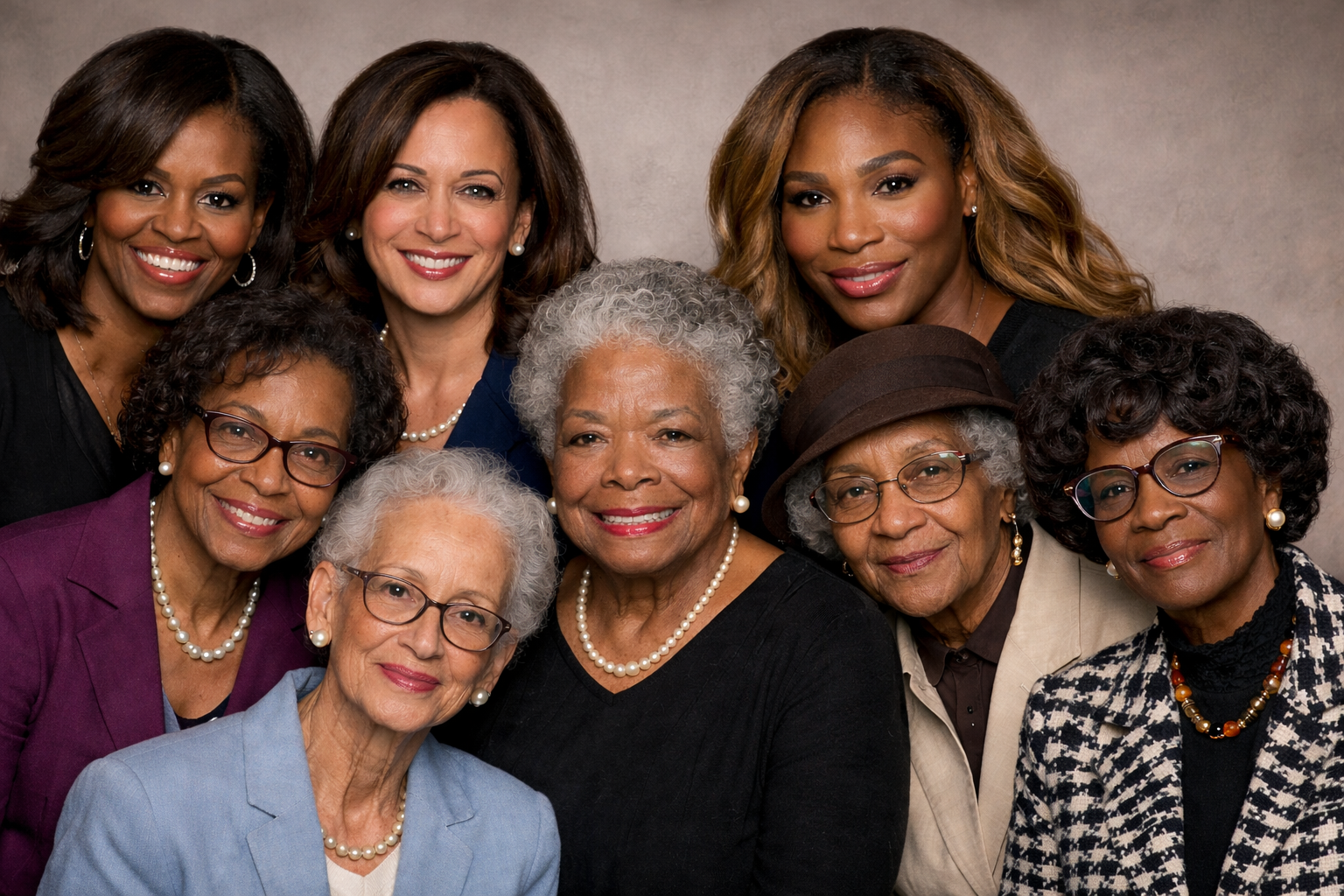
Black women have always carried more than their share of the world. They have carried families through hardship, communities through injustice, and nations through moments of reckoning. Their strength is not loud for attention it is steady, resilient, and transformative. To celebrate Black women is to honor a legacy of brilliance forged in resistance and refined through perseverance.
Take Michelle Obama, a woman whose presence redefined what it meant to be First Lady. Raised on the South Side of Chicago in a working-class family, she learned early that excellence was not optional it was necessary. Navigating elite institutions like Princeton University and Harvard Law School, she faced the quiet weight of being “the only one” in many rooms. Yet she did not shrink. As First Lady, she turned her platform into purpose, championing education for girls, healthy living, and military families. She showed young Black girls everywhere that intelligence, authenticity, and grace can coexist, and that their voices matter.
Vice President Kamala Harris stands as another monumental figure. The daughter of Jamaican and Indian immigrants, Harris built her career in spaces where few women especially Black women had been welcomed before. As a prosecutor, Attorney General of California, U.S. Senator, and now the first woman, first Black American, and first South Asian American Vice President of the United States, her ascent represents both personal triumph and collective progress. Her journey was not free of scrutiny or doubt, but her resilience carved a path for generations to follow. She embodies the truth that breaking ceilings often requires enduring pressure from above and below.
In the realm of innovation, women like Gladys West have reshaped the very way we navigate the world. A mathematician whose calculations were essential to the development of GPS technology, West worked in an era when Black women in STEM were rarely acknowledged, let alone celebrated. Despite limited recognition at the time, her work laid the groundwork for systems that billions now rely on daily. Her legacy reminds us that heroism does not always stand in the spotlight; sometimes, it is embedded in the quiet precision of groundbreaking work.
Similarly, Alice H. Parker, an inventor ahead of her time, designed an early central heating system powered by natural gas in the early 20th century an innovation that would influence modern home heating. Living during a period when both racism and sexism attempted to limit opportunity, Parker’s ingenuity broke through societal constraints. Her contribution reflects the long-standing tradition of Black women turning necessity into invention and imagination into impact.
And the list continues.
Shirley Chisholm, the first Black woman elected to Congress, declared herself “unbought and unbossed” as she ran for President in 1972. Maya Angelou transformed pain into poetry, giving voice to the silenced and courage to the weary. Serena Williams redefined dominance in tennis while challenging stereotypes about Black womanhood and strength. Katherine Johnson calculated trajectories that sent astronauts into space and brought them safely home. Each woman faced barriers shaped by race and gender, yet none allowed those barriers to dictate their destiny.
What makes these women heroic is not perfection, but persistence. They have navigated systems not designed for their success. They have endured doubt both internal and external, and transformed it into determination. They have balanced public responsibility with private sacrifice. And through it all, they have remained rooted in identity, culture, and community.
Black women have long been architects of change, even when history tried to footnote their names. Their resilience has reimagined leadership. Their intellect has redefined possibility. Their creativity has reshaped culture. From classrooms to courtrooms, laboratories to legislatures, stages to space centers, they continue to build futures that once seemed unreachable.
To celebrate Black women is to acknowledge not only what they have achieved, but what they have endured to achieve it. It is to recognize that their victories are rarely individual they are communal triumphs that uplift entire generations.
In every era, Black women rise. Not because the road is easy, but because their vision is stronger than the obstacles before them. And in rising, they light the way for us all.